합성목재
Composite Wood, Hardwood, and Treated Pine Deck Materials — Features and Selection Guide
Decks have become a key part of outdoor design in urban parks, residential complexes, and commercial spaces—serving not only as walking paths but also as areas for rest and interaction. Since decks are constantly exposed to weather, selecting the right material greatly impacts long-term satisfaction and maintenance efficiency.
Three main materials are commonly used for outdoor decks: composite wood (WPC), hardwood (such as Ipe or Cumaru), and treated pine (Korean red pine). Each has its own characteristics in terms of durability, workability, appearance, and cost, making material selection dependent on the project environment and purpose.
1. Composite Wood (WPC)
Composite wood is made by combining wood flour and plastic, resulting in high resistance to moisture, decay, and insects. It requires no painting, and regular cleaning is sufficient for maintenance. This makes it ideal for public areas, poolsides, and coastal installations.
WPC is available in standardized sizes, making installation easy through either clip or screw systems. However, it lacks the natural texture and warmth of real wood.
Common WPC Decking Sizes:
| Thickness | Dimension (mm) | Application |
|---|---|---|
| 20T | 20×150×2400~3000 | Wall cladding, fencing, or non-load-bearing deck |
| 25T | 25×150×2400~3000 | Standard for general decks |
| 30T | 30×150×2400~3000 | Heavy-duty structures such as bridges or platforms |
| Others | 134mm, 138mm width | Non-standard, less recommended due to compatibility issues |
2. Hardwood Decking
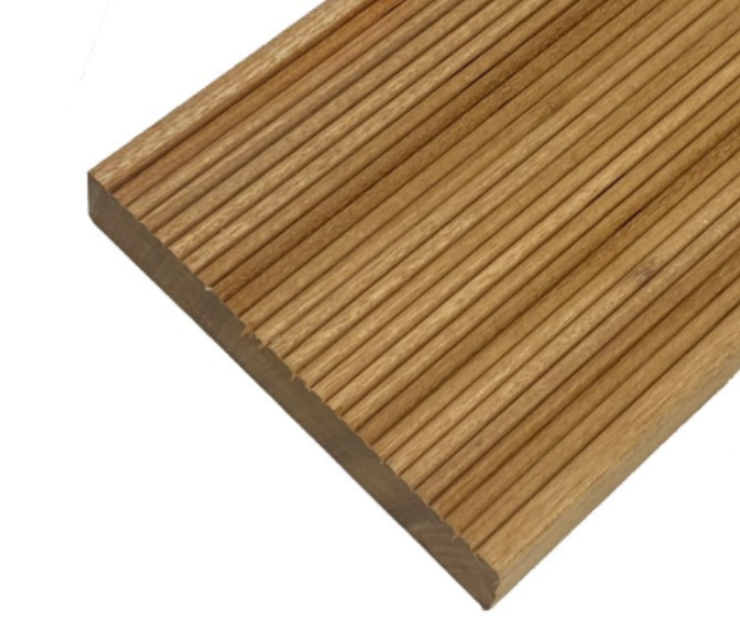
Hardwood is prized for its natural texture, luxury appeal, and strength. It is highly durable and often used for premium projects—resorts, villas, and cafés.
However, it requires skilled installation and periodic maintenance (oil staining every 2–3 years) to maintain color and prevent cracks.
Popular Hardwood Types and Features:
| Type | Origin | Characteristics |
|---|---|---|
| Ipe | South America | Extremely hard, long-lasting, water-resistant |
| Cumaru | South America | Slightly cheaper than Ipe, warm tone, excellent durability |
| Merbau | Southeast Asia | Red-brown color, strong and stable |
| Ash | North America, Russia | Fine grain, good for furniture/interiors |
| Oak | North America, Europe | High density, diverse tones, elegant finish |
| Teak | Southeast Asia | Highest water and weather resistance, used in yachts and luxury decks |
Standard Dimensions:
| Category | Size (mm) | Notes |
|---|---|---|
| Thickness | 19T–30T | 25T+ recommended for outdoor use |
| Width | 90–150 | 140–150mm most common |
| Length | 1800–3600+ | Customizable per site conditions |
Processing Notes:
Hardwoods can be re-sawn or planed for custom sizes. However, due to their high density, tools wear quickly, and improper drying can lead to warping.
3. Treated Pine (Korean Red Pine)
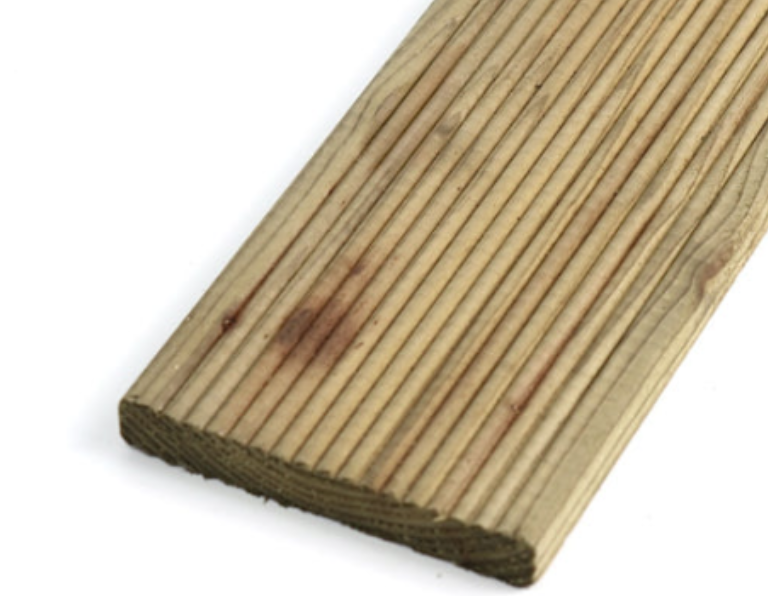
Treated pine is a cost-effective and highly workable material often used in parks and private homes. It provides a natural wooden look but has a shorter lifespan—typically 5 to 10 years—depending on treatment quality and maintenance.
Standard Sizes:
| Size (mm) | Application |
|---|---|
| 21×120 | Most common for decks |
| 25×145 | Visually stable, used for larger decks |
| 30×150 | For high-load or high-traffic structures |
| 18×90 / 21×140 | Suitable for benches, terraces |
| 38×89 (2×4 inch) | Frame construction only |
Surface Options:
- Flat type: clean appearance after installation
- Grooved type: slip-resistant, ideal for public areas
Cautions:
- Blades wear quickly when cutting treated lumber
- Chemical odor may be noticeable during processing
- Apply protective oil or stain after cutting to prevent water damage
4. Comparison Table: Deck Material Features
| Feature | Composite Wood (WPC) | Hardwood (Ipe, Cumaru) | Treated Pine |
|---|---|---|---|
| Durability | 10–15 years, moisture resistant | 10–20 years, strong | 5–10 years with treatment |
| Maintenance | No painting needed | Oil every 2–3 years | Same as hardwood |
| Workability | Easy installation | Difficult (requires skill) | Easy |
| Appearance | Uniform color, modern look | Natural, luxurious | Natural but less refined |
| Environmental Aspect | Recyclable options | Varies by logging source | May raise chemical concerns |
| Cost | Medium–High | High | Low–Medium |
| Best Use | Public facilities, coastal areas | Luxury homes, resorts | Private homes, temporary decks |
Conclusion
Choosing the right decking material is not just about looks—it’s about balancing environmental exposure, budget, and maintenance.
Composite wood offers convenience, hardwood delivers timeless beauty, and treated pine provides affordability.
By understanding the strengths of each, you can achieve both aesthetic satisfaction and long-term durability in your outdoor space.
References
- Ministry of Land, Infrastructure and Transport, “Standard Specifications for Exterior Construction Materials,” 2023.
- Korea Forest Service, “Wood Treatment and Durability Standards,” 2024.
- International Wood Products Association (IWPA), “Guide to Tropical Hardwood Decking,” 2022.
About the Author