How to Calculate Family Relationship Degrees (Chonsu) in Korea
In Korea, family relationships are not only emotional bonds but also legal relationships defined by numbers.
These numbers are called Chonsu (촌수), which represents the degree of blood relationship between people.
Understanding Chonsu is essential because it is used in inheritance, marriage restrictions, military and veteran benefits, funeral procedures, and official documents. This guide explains the concept in a simple and practical way.
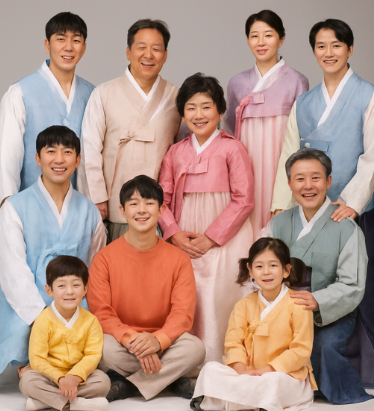
What Is Chonsu?
Chonsu is a system that shows how closely related two people are by blood, starting from yourself.
- A smaller number means a closer blood relationship
- A larger number means a more distant relative
- Spouses and in-laws are not included, because they are not blood relatives
Chonsu is commonly used in family registries and legal documents in Korea.
Basic Rules for Calculating Chonsu
There are two main types of family relationships: lineal and collateral.
1. Lineal Relatives (Direct Family Line)
Lineal relatives are connected directly upward or downward from you.
- Each generation counts as one degree
Examples
- Parent → 1st degree
- Grandparent → 2nd degree
- Child → 1st degree
- Grandchild → 2nd degree
Simply count how many generations separate you.
2. Collateral Relatives (Side Family Line)
Collateral relatives share a common ancestor but are not directly above or below you.
How to calculate
- Count the steps up to the common ancestor
- Count the steps down to the relative
- Add the two numbers together
Example: Cousin
- You → Grandparents: 2 steps
- Grandparents → Cousin: 2 steps
- Total: 4th degree
Common Chonsu Examples
- Sibling: 2nd degree
- Uncle or Aunt: 3rd degree
- Cousin: 4th degree
- Cousin’s child: 5th degree
Why Chonsu Is Important in Korea
Chonsu is not just traditional knowledge—it has real legal effects.
- Inheritance: Rights usually apply up to 4th-degree blood relatives
- Marriage restrictions: Marriage may be restricted within certain degrees
- Military and veteran benefits: Family eligibility is defined by Chonsu
- Funeral and death registration: Determines who can legally act as family
- Government support programs: Family verification often requires Chonsu
Final Summary
- Lineal relatives: count generations only
- Collateral relatives: go up to the common ancestor, then down
- 4th-degree relatives are especially important in Korean law
- Spouses and in-laws do not have a Chonsu degree
Once you understand these simple rules, calculating Korean family relationships becomes easy and clear. Knowing Chonsu helps you handle legal and administrative situations with confidence.
View korean version
한국의 가족관계 촌수 계산 완벽 가이드 – viewrap.com
About the Author