The Computer Revolution: From Calculators to Machines Shaping Human Civilization

From the abacus to AI and quantum computers, explore the global and Korean history of computing, and witness the revolutionary journey that transformed machines from simple calculators into architects of human civilization.
1. A Story Born from the Desire to Calculate
Humans have lived alongside numbers since the dawn of civilization. We counted goods, calculated seasons, and measured time. At first, our fingers were our calculators, and stones or sticks served as recording tools. Around 2500 BCE in Mesopotamia, the abacus emerged as one of the first tools to delegate part of human thinking to a device. This advancement in calculation laid the foundation for human civilization.
The human desire to manipulate numbers went beyond simple counting—it became a driving force for societal progress. In commerce and astronomy, accurate calculations determined the structure of societies and the pace of economic activity, profoundly shaping civilization.
2. Can Machines Think for Us?
In 17th-century France, Blaise Pascal invented the Pascaline, a mechanical calculator capable of addition and subtraction. Though simple, it marked a revolutionary step in entrusting part of human thought to machines.
German mathematician Gottfried Wilhelm Leibniz later created a calculator capable of all four arithmetic operations. In the 19th century, British mathematician Charles Babbage designed the Analytical Engine, introducing the concept of programming. Although never completed, Babbage’s design is recognized as the prototype of modern computer architecture.
The Analytical Engine included:
- Memory
- Arithmetic unit
- Input device
- Output device
- Program concept
It was, in theory, the first universal computer.
3. Electricity Accelerates Thought
By the 20th century, humans realized:
“Machines must be faster. For that, we need electrons, not gears.”
The Birth of Electronic Computers
- ABC Computer: First electronic calculator
- MARK I: First electric automatic calculator
- ENIAC: The first fully electronic digital computer
- EDSAC: Realized stored-program architecture
Computers exponentially expanded the range of information humans could process, impacting military, aviation, and astronomical calculations.
4. Computers Enter Our Homes
With the development of the Intel microprocessor (CPU) in 1971, computers shrank to the size of a palm, paving the way for personal computers.
- Apple II (1977): Popularized PCs for the general public
- IBM PC (1981): Standardized PCs, spreading into homes and offices
- 1990s Internet: Transformed computers into the core of a networked civilization
Later advancements, including smartphones and cloud services, turned computers into platforms for information, connectivity, and social innovation.
5. Artificial Intelligence and Quantum Computers: A New Turning Point
- AI (1956): Dartmouth Conference introduces the concept of machines mimicking human intelligence
- Deep Learning (2010s): Realized through GPUs and big data
- Quantum Computing (concept in 1981, Google’s quantum supremacy in 2019): Solves tasks in minutes that would take conventional computers millennia
AI learns human thought processes to assist in decision-making and prediction, while quantum computing promises breakthroughs in drug development, financial modeling, and climate forecasting, signaling the next industrial revolution.
6. Timeline of Computing
| Year | Technology | Significance |
|---|---|---|
| 2500 BCE | Abacus | First calculator |
| 1642 | Pascaline | Mechanical calculation |
| 1837 | Analytical Engine | Programming concept |
| 1946 | ENIAC | Electronic computation |
| 1949 | EDSAC | Stored-program computer |
| 1956 | AI concept | Beginning of intelligent machines |
| 1971 | CPU | Personal computing becomes possible |
| 1977 | Apple II | Popularization of PCs |
| 1981 | IBM PC | Standardization and home/office spread |
| 1990 | Web | Internet revolution |
| 2012 | Deep Learning | Commercial AI |
| 1981 | Quantum computing concept | Next-generation computing |
| 2019 | Quantum supremacy | Technology validation |
| 2020s | Quantum competition | Industrialization phase |
7. Computers as an Extension of Humanity
Computers are more than machines. They are:
- Externalized memory
- Tools extending human thought
- Intelligent systems supporting prediction and decision-making
We have entered an era not just of using computers, but living alongside them. The evolution of computers reflects the limits of human expansion and serves as a co-architect of civilization.
Appendix: The Evolution of Computing in Korea
Though Korea entered the computer industry later, it quickly grew in step with global trends.
- 1967: Korea Electronics and Telecommunications Research Institute established; first domestic electronic computer development begins
- 1970s: Samsung, LG, and other companies start developing calculators and computers
- 1977: Sambo Computer founded; personal computers introduced
- 1980s: PC manufacturing expands with KCC, Sambo, Daewoo; universities and research institutes adopt computers
- 1990s: Internet infrastructure grows; PC adoption soars; Hancom releases Hangul 2.0
- 2000s: Mobile and internet industries flourish; Korea emerges as a semiconductor powerhouse
- 2010s: AI and big data research expand; Korean supercomputers developed
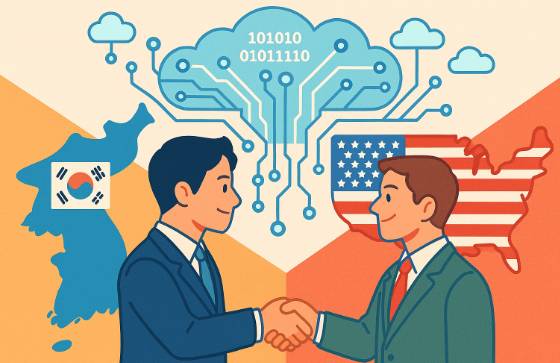
- 2020s: Quantum computing research intensifies; global collaborations increase; AI industry policy promoted
Korea’s computing history demonstrates the convergence of industrialization, education, and government policy, creating societal innovation beyond mere technological development. Today’s Korean IT competitiveness stands on this historical foundation.
About the Author